
Introduction
In the fast-paced arena of global commerce, corporate travel remains an indispensable engine for growth, relationship-building, and strategic execution. As executive schedules become increasingly compressed, the logistics of ground transportation have evolved from a basic travel amenity into a critical operational variable. For corporate travel managers, executive assistants, and business travelers themselves, the choice of ground transport can directly impact productivity, physical security, and overall trip success. This brings us to a pivotal debate in corporate logistics: Private Transportation vs Rideshare Services: Which Is Better for Business Travelers?
While rideshare platforms revolutionized urban mobility over the past decade through app-based convenience, the luxury private transportation sector has simultaneously modernized, doubling down on uncompromising reliability, duty of care compliance, and executive-grade amenities. Today’s business travel landscape demands more than just getting from Point A to Point B. It requires a seamless transition between the office, the airport, and the boardroom. To determine which option truly serves the modern enterprise, we must analyze both models across several critical operational vectors: reliability, productivity, safety, financial predictability, and brand representation.
The Core Definitions: Understanding the Models
Before diving into a head-to-head comparison, it is essential to define the operational frameworks of both transportation modes. These structural differences dictate the level of service, safety, and reliability a traveler can expect.
Chauffeured Private Transportation
Private luxury transportation refers to professional, pre-arranged ground transport services utilizing a dedicated fleet of high-end vehicles (such as executive sedans, SUVs, and sprinters) operated by professional, certified chauffeurs. These services are governed by strict commercial transportation regulations, carry high-limit commercial liability insurance, and are managed by dedicated dispatch and logistics teams. Booking is typically done in advance, offering guaranteed availability, personalized itinerary management, and flight-tracking integration.
On-Demand Rideshare Services
Rideshare services leverage peer-to-peer technology platforms to match passengers with independent, freelance drivers using their personal vehicles. Operating on an on-demand basis, these services rely heavily on algorithmic dispatching and dynamic pricing models. While premium tiers (such as Uber Black or Lyft Lux) offer upgraded vehicles and highly rated drivers, the underlying business model remains rooted in the gig economy, where driver availability, vehicle maintenance, and service quality are decentralized and subject to real-time market fluctuations.
Private Transportation vs Rideshare Services: Which Is Better for Business Travelers?
To provide a definitive answer to this question, we must evaluate both options through the lens of a corporate traveler whose time, safety, and peace of mind are of paramount importance.
1. Reliability, Punctuality, and Airport Logistics
For a business traveler, a missed flight or a delayed arrival at a client presentation can result in lost revenue and damaged professional relationships. Therefore, punctuality is the ultimate metric of success in ground travel.
The Rideshare Reality: Rideshare services operate on an on-demand, algorithmic model. While highly efficient in dense metropolitan areas during off-peak hours, their reliability plummets during peak commute times, inclement weather, major conventions, or in suburban and rural areas. A traveler attempting to book a rideshare at 4:30 AM for an early-morning flight often faces extended wait times, high cancellation rates, and the anxiety of “no drivers nearby.” Furthermore, rideshare drivers can cancel trips at their discretion without penalty, leaving travelers stranded at critical moments.
The Private Transportation Standard: Chauffeured services operate on a guaranteed reservation system. When a private vehicle is booked, it is dedicated exclusively to that traveler’s itinerary. Professional chauffeurs typically arrive 15 minutes prior to the scheduled pickup time, establishing a stress-free buffer. Advanced dispatch systems integrate real-time flight tracking, meaning that if an executive’s flight is delayed by three hours, the chauffeur’s schedule is automatically adjusted. The traveler lands knowing their vehicle is waiting, regardless of arrival time.
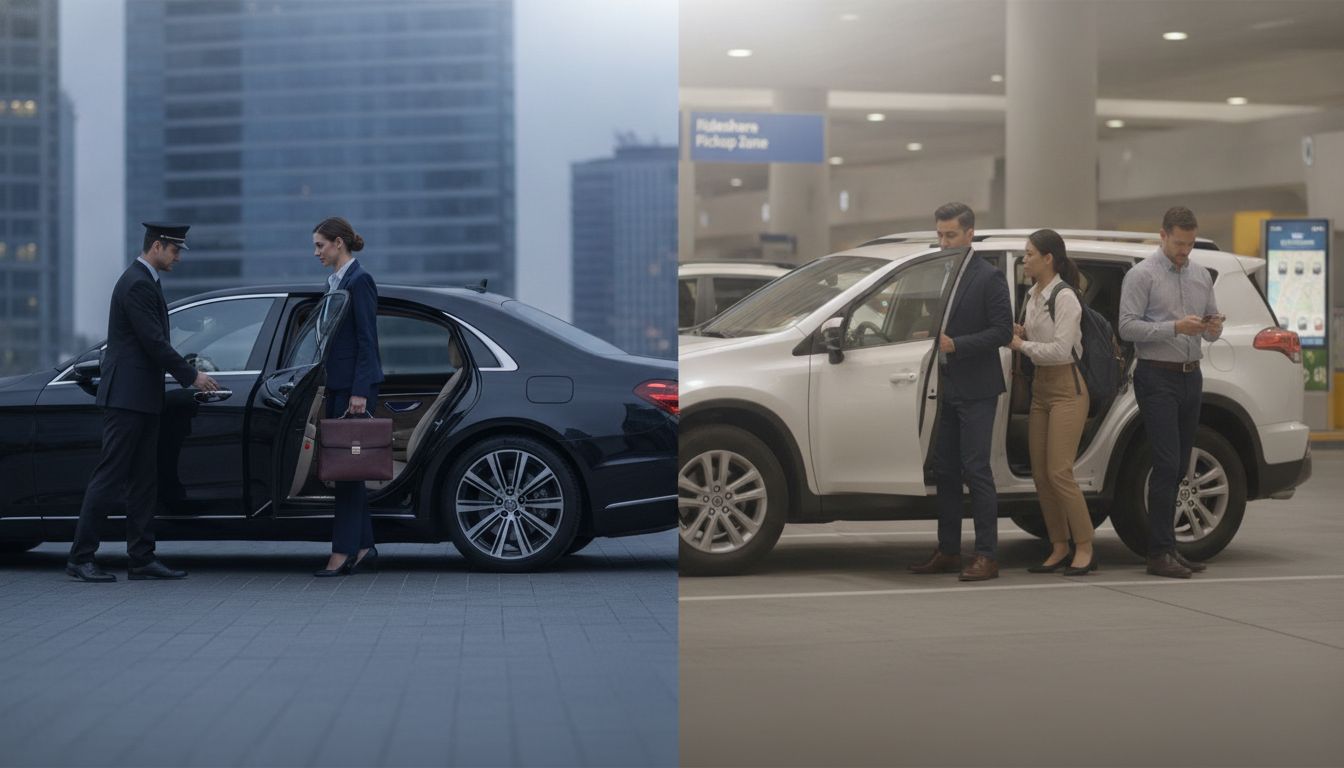
Airport Pickups: Navigating massive hub airports like JFK, LAX, or O’Hare is vastly different under each model. Rideshare passengers must walk to designated, often chaotic, rideshare pickup zones, which can require long walks through parking garages and waiting in crowds. Conversely, private transportation offers “Meet and Greet” services, where a professional chauffeur meets the traveler inside the terminal at baggage claim, assists with luggage, and escorts them directly to a curbside vehicle parked in a VIP commercial lane.
2. The Mobile Office: Productivity and In-Cabin Experience
For high-level executives, travel time is not downtime; it is an extension of the workday. The interior of a vehicle must function as a secure, quiet, and fully equipped mobile office.
The Rideshare Environment: Because rideshare drivers utilize their personal vehicles, the in-cabin environment is highly unpredictable. A traveler may encounter lingering odors, personal belongings of the driver, loud or inappropriate music, and inconsistent temperature control. Furthermore, gig-economy vehicles rarely feature amenities conducive to work. The lack of privacy makes it difficult to make sensitive business phone calls, review confidential documents, or prepare for an upcoming presentation without distraction.
The Private Transportation Boardroom: Luxury private vehicles are meticulously curated to meet the needs of corporate clientele. Executive sedans and SUVs feature pristine, smoke-free leather interiors, climate control, and privacy tinting. Chauffeurs are trained in professional discretion, signing non-disclosure agreements (NDAs) to ensure that confidential corporate strategy discussed in the backseat remains entirely private. Many luxury fleets equip their vehicles with high-speed Wi-Fi, power outlets, USB ports, bottled water, and daily periodicals, allowing the traveler to seamlessly conduct video conferences, answer emails, and arrive at their destination fully prepared.
3. Duty of Care, Safety, and Corporate Compliance
Under corporate law, companies have a legal and moral obligation to ensure the safety and well-being of their employees while traveling on company business. This concept, known as “Duty of Care,” has become a cornerstone of modern corporate travel policies.
Rideshare Safety Gaps: While major rideshare companies have introduced safety features within their apps, the decentralized nature of their business model presents inherent risks. Background checks for rideshare drivers are often automated and limited to public database searches, which may not capture all criminal histories or driving infractions. Additionally, rideshare vehicles are personally owned; while platforms mandate annual safety inspections, there is minimal hands-on oversight to ensure that brakes, tires, and suspension systems are maintained to rigorous commercial standards. From a liability perspective, rideshare insurance coverage can be complex, often relying on a combination of the driver’s personal policy and the platform’s contingent liability policy, which can lead to legal complications in the event of an accident.
Private Transportation Security: Professional chauffeured companies operate under a strict compliance framework. Chauffeurs are W-2 or highly vetted contracted professionals who undergo rigorous, ongoing background checks, physical examinations, drug testing, and defensive driving certification. Vehicles are owned or leased by the company, subjected to daily preventative maintenance schedules, and washed before every dispatch. Crucially, private transportation providers carry commercial fleet insurance policies, typically ranging from $1 million to $5 million or more in liability coverage, providing complete peace of mind for corporate risk management departments.
Comparative Overview: Private Transportation vs Rideshare Services
To help corporate travel decision-makers visualize the differences between these two service structures, the following table highlights the core operational distinctions:
| Operational Metric | Chauffeured Private Transportation | Premium Rideshare Services |
|---|---|---|
| Reservation Model | Pre-booked, guaranteed availability with dedicated dispatch. | On-demand or scheduled (subject to driver acceptance). |
| Driver Vetting & Training | Professional chauffeurs, background checked, NDAs, defensive drive trained. | Gig-economy drivers, basic background checks, variable driving experience. |
| Vehicle Standards | Late-model executive vehicles, daily detailing, strict maintenance logs. | Personal vehicles, variable cleanliness, driver-managed maintenance. |
| Pricing Structure | Transparent, all-inclusive flat rates (gratuity and tolls included). | Dynamic surge pricing based on real-time local demand. |
| Duty of Care Compliance | 100% compliant; commercial fleet insurance ($1M – $5M+). | Varying compliance; complex contingent insurance structures. |
| Airport Experience | Inside Meet & Greet, luggage assistance, VIP commercial lane access. | Designated rideshare zones, self-navigation, curbside chaos. |
| In-Cabin Amenities | Wi-Fi, charging ports, bottled water, writing desks, absolute privacy. | Driver-dependent, minimal business amenities, limited privacy. |
4. Financial Predictability and Accounting Efficiency
Corporate accounting departments require predictable expenses, transparent billing, and streamlined reconciliation processes to manage travel budgets effectively.
Surge Pricing and Fragmented Invoicing: Rideshare platforms utilize dynamic pricing algorithms that fluctuate based on demand, weather, traffic, and local events. A ride that typically costs $40 can skyrocket to $150 or more during a sudden rainstorm, a major convention, or rush hour. This unpredictability makes accurate travel budgeting nearly impossible. Furthermore, rideshare expenses generate individual receipts for every single trip, forcing business travelers to manually upload dozens of micro-transactions into expense management systems like Concur, consuming valuable administrative hours.
Fixed Rates and Centralized Corporate Accounts: Private transportation providers offer fixed, transparent pricing structures. When a corporate travel coordinator books a trip, the rate is locked in, including taxes, tolls, and gratuities, regardless of traffic delays or weather conditions. This predictability allows for precise budgeting. Furthermore, professional transport companies cater to corporate clients by offering centralized billing. Instead of dozens of fragmented receipts, a company receives a single, detailed monthly invoice categorized by employee, department, or client billing code, drastically reducing the administrative burden on corporate accounting teams.
5. Brand Representation and Professionalism
In business, first impressions are invaluable. The way an executive arrives at a high-stakes meeting, client dinner, or corporate merger negotiation speaks volumes about the organization’s standards and attention to detail.
The Rideshare Aesthetic: Arriving at a major client’s headquarters in a mid-sized, potentially cluttered rideshare vehicle can undermine an executive’s professional image. It sends a message of cost-cutting rather than premium execution. Furthermore, rideshare drivers are dressed in casual attire, which may not align with the formal or business-casual standards of a corporate engagement.
The Chauffeur Standard: Arriving in a pristine, late-model black executive sedan or luxury SUV driven by a professional chauffeur dressed in a sharp, dark suit immediately projects success, professionalism, and respect for the client. When hosting key clients, providing them with a dedicated private chauffeur to transport them from the airport to their hotel or dinner shows a level of hospitality that can solidify long-term partnerships and secure multi-million-dollar deals.
Key Takeaways
- Time Efficiency: Private transportation eliminates wait times, utilizes flight-tracking to adjust for delays, and provides seamless curbside or baggage claim pickups.
- Duty of Care: High-limit commercial insurance and rigorous driver vetting make private transport the only option that fully satisfies corporate risk management protocols.
- Productivity: Luxury vehicles offer quiet, secure, and technologically equipped cabins that function as a mobile office for busy executives.
- Financial Clarity: Fixed, all-inclusive rates eliminate the unpredictability of surge pricing, while corporate accounts streamline expense reconciliation.
- Brand Impact: Arriving in a professionally chauffeured vehicle projects authority, success, and a commitment to high standards.
Frequently Asked Questions
Is private transportation significantly more expensive than premium rideshare services?
While the baseline cost of a private chauffeured service may be higher than a standard rideshare, the gap narrows significantly when comparing premium rideshare tiers (such as Uber Black) during peak travel times. When factoring in rideshare surge pricing, wait times, lost executive productivity, and administrative expensing costs, private transportation often proves to be the more cost-effective choice for corporations.
How do private transport companies handle last-minute flight delays?
Private transportation providers utilize advanced flight-tracking software integrated with their dispatch systems. Chauffeurs monitor the flight’s progress in real-time. If a flight is delayed, early, or diverted, the pickup time is automatically adjusted, ensuring the chauffeur is curbside exactly when the traveler exits the terminal, with no additional waiting fees in most standard scenarios.
Can corporations set up dedicated accounts for multiple employees?
Yes. Professional luxury transportation providers specialize in corporate accounts. They offer centralized booking portals, customized billing structures, passenger profile management, and dedicated account managers to handle the travel needs of entire organizations, from individual C-suite executives to large-scale group events.
What vehicle options are typically available through private transportation?
The executive fleets of private transportation companies feature a wide array of late-model, luxury vehicles. These typically include executive sedans (such as the Cadillac XTS or Mercedes S-Class), luxury SUVs (such as the Chevrolet Suburban or Cadillac Escalade), executive Mercedes-Benz Sprinter vans, and mini-coaches for larger corporate groups.
Are private chauffeured services available globally?
Yes, premier private transportation companies maintain extensive global affiliate networks. This allows corporate travel managers to book consistent, high-quality chauffeured services worldwide through a single point of contact, ensuring the same high standards of safety and reliability are met whether the executive is traveling to London, Tokyo, or New York.
Conclusion
When analyzing the question of Private Transportation vs Rideshare Services: Which Is Better for Business Travelers?, the evidence overwhelmingly points to private chauffeured transportation as the superior choice for corporate travel. While rideshare services offer convenience for casual, spontaneous personal trips, they fall short of the rigorous demands, safety parameters, and professional standards required by modern business environments.
Investing in private luxury transportation is not merely an indulgence; it is a strategic business decision. By prioritizing reliability, duty of care, executive productivity, and brand image, corporations protect their most valuable assets—their people and their time. To elevate your organization’s corporate travel standards, reduce administrative overhead, and ensure your executives arrive focused and prepared, partner with a trusted luxury transportation provider to establish a dedicated corporate account today.